

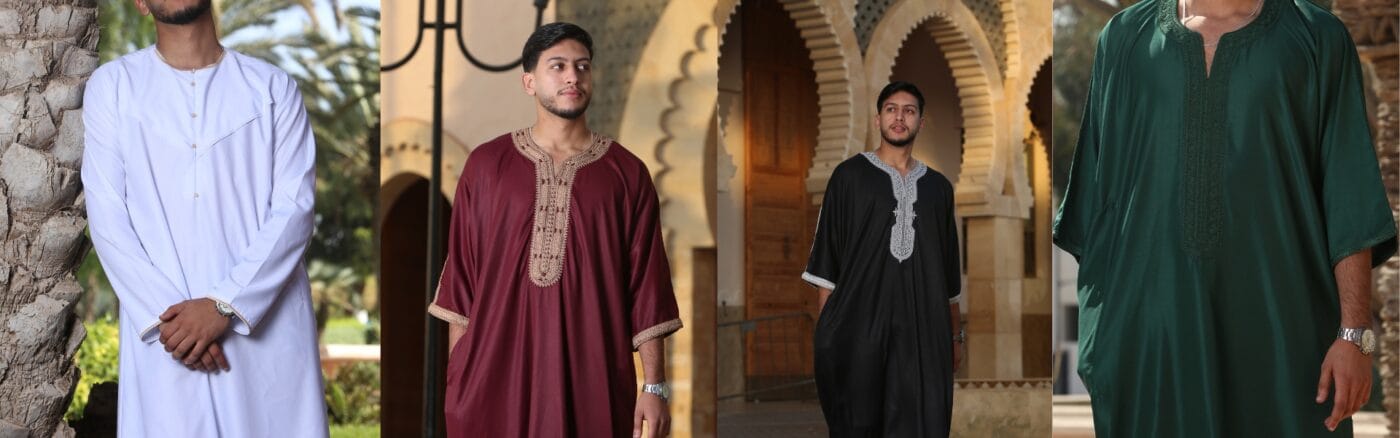
Choosing a thobe isn’t only about cut, fabric or sleeve length. Colour plays a much bigger part in how men dress than most people realise. Many Muslim men in the UK stick to a small range of shades out of habit, yet each colour carries its own associations in Islamic culture, clothing history and even modern style. The shades you wear can affect how warm you feel, how formal you look and how confident you walk out of the house.
This guide breaks down what different colours tend to signal, why certain tones feel more comfortable in daily life and how men can build a balanced set of thobes without overthinking it.
Why Colour Choice Still Matters
Colour shapes first impressions more than we notice. Research in colour psychology suggests that people make quick judgments based on tone alone. In Islamic clothing, these impressions sit alongside practical needs like heat, season and formality.
Some simple examples:
- Light shades keep you cooler outdoors.
- Darker tones feel more structured and formal.
- Neutral colours blend into almost any setting.
In short, colour is one of the easiest ways to adjust the feel of your outfit without changing the garment itself.
A Closer Look at Popular Colours in Men’s Islamic Clothing
- White: White is widely worn in Islamic clothing because it is associated with purity in religious texts, and the Prophet Muhammad (peace be upon him) recommended white garments. Many Muslim men keep a white thobe specifically for Jummah and Eid. It is also practical in hot climates because it reflects sunlight, which is why it remains common across the Gulf and during Umrah or Hajj.
- Black: Black is used across many Muslim communities for formal wear, funerals and evening gatherings. It shows fewer creases than lighter colours and keeps its shape well throughout the day. In colder countries like the UK, black thobes are preferred in winter because the colour absorbs heat and feels warmer outdoors.
- Grey: Grey is popular among men who want a simple, everyday option. It hides marks better than white and doesn’t fade as quickly as darker colours. Because it sits between casual and formal, many men use it for work, study and regular masjid visits where practicality matters more than occasion dressing.
- Blue: Blue is often worn in South Asian and East African communities, especially lighter blues in the summer. It adds a small amount of colour without feeling too bold for modest wear. Lighter shades reflect more light, making them a sensible choice for warm months or long outdoor days.
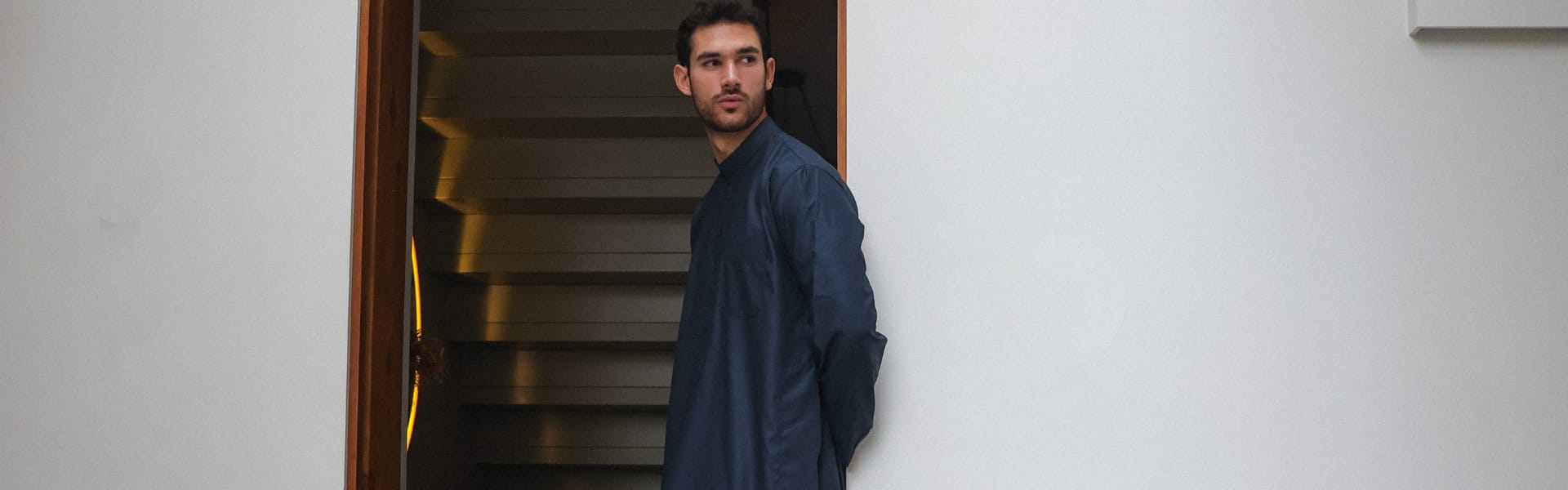
- Navy: Navy is common across Middle Eastern and Western menswear, so Muslim men in the UK often choose it because it blends traditional clothing with a familiar colour used in office and smart casual outfits. Navy also shows less lint than black and pairs well with winter coats and jackets.
- Beige: Beige, stone and sand tones are widely used in North African and Gulf clothing because they stay cooler in the sun and match natural desert environments. In the UK, men choose them for spring and summer as they look clean without being bright. These tones also complement brown and tan footwear, which many men already own.
- Wine: Wine and maroon shades are popular for Eid and family gatherings, especially in South Asian households where deeper tones are part of cultural dress. They add richness to embroidered or tailored thobes without stepping into bright colours. These shades also hold their colour well after repeated washing compared to lighter fabrics.
- Green: Green has religious significance as it is mentioned in several verses describing garments in Jannah, which gives it a special place in Islamic clothing traditions. In many Arab and African regions, green is used for celebration wear or community events. It is also a practical choice for UK weather, as mid to dark greens work well across all seasons.
How Climate and Lifestyle Shape Colour Choices
UK weather affects colour selection more than people think. Seasons play a role too:
- Spring and summer: men typically prefer white, stone, cream and lighter greys.
- Autumn and winter: darker tones like navy, charcoal and black feel more practical and warm.
Lifestyle matters as well. Men working in offices lean towards navy and grey. Men on the go often choose colours that handle washing and movement well, such as taupe or dark grey.
What Your Colour Choices Say About Your Style
Most men choose colours based on comfort and the kind of day they expect, not because of trends or symbolism. Those choices gradually show the type of look you prefer. White and navy suit men who like a clean, classic appearance. Grey and taupe work well for everyday wear because they blend in easily and handle regular use. Black gives a sharp, organised feel without much effort, while olive and maroon add a bit of personality without stepping away from modest dressing. There isn’t a right or wrong way to build your wardrobe. The aim is to pick colours that feel natural to you and help you move confidently through your day.
